By Up In Smoke Wraps · October 3, 2026
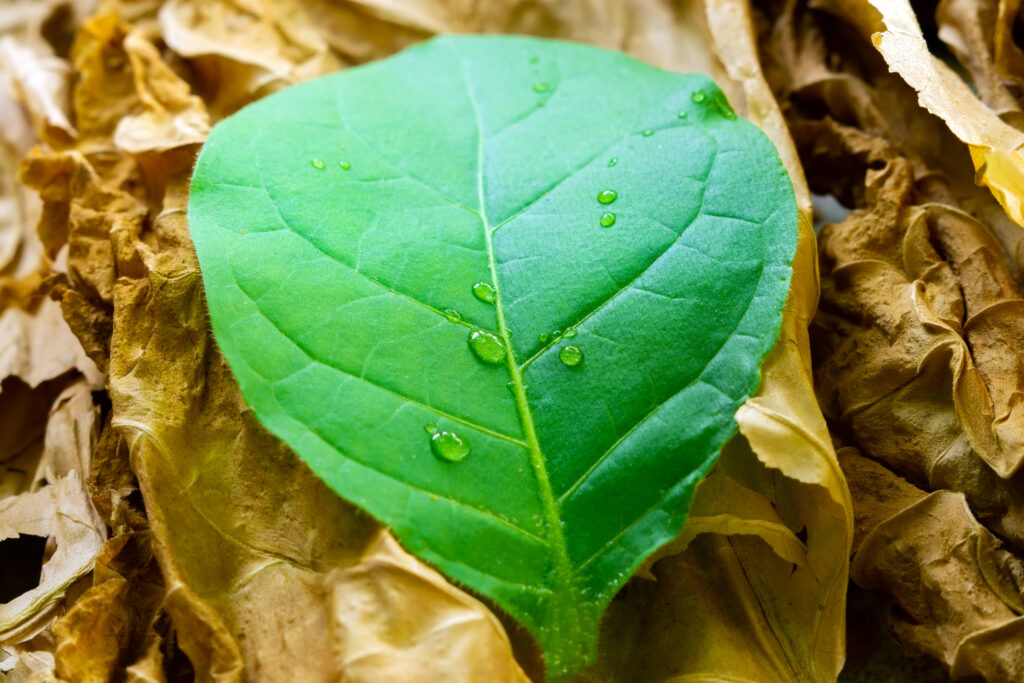
Most rollers blame technique. They roll tighter, try a different tuck, or change their grind. But if a natural leaf wrap cracks, burns unevenly, or tastes stale, the problem may be the wrap itself — specifically, its moisture.
Freshness is an important factor in a natural leaf wrap’s flexibility, handling, and overall quality, yet it’s often overlooked.
A dry leaf becomes brittle, harder to handle, and more prone to splitting. Even the cleanest roll can’t compensate for a wrap that has lost its flexibility.
What Moisture Actually Does Inside a Leaf
Natural tobacco leaf is hygroscopic, meaning it absorbs and releases moisture depending on its environment. Temperature, relative humidity, processing, and packaging all influence its moisture content.
A properly conditioned leaf is generally more flexible and easier to fold, tuck, and roll. When excessively dry, it can become brittle and split along its veins or edges.
Too much moisture isn’t ideal either. Excessive moisture can affect handling and burning characteristics and contribute to storage problems.
Although cigar storage commonly uses relative humidity levels around 65–72%, this range is not necessarily ideal for every natural leaf wrap. Relative humidity measures moisture in the air, while leaf moisture content measures water within the tobacco. They are related but not interchangeable.
The goal is to maintain suitable conditions for the specific product.
Why Dry Leaf Can Burn Differently
Moisture affects how tobacco heats and burns because water absorbs energy as it warms and evaporates. Combustion also depends on leaf thickness, composition, airflow, and how the wrap is rolled.
An excessively dry wrap is harder to handle and more likely to burn inconsistently, and cracks or gaps can disrupt airflow. There’s no single temperature difference that separates a dry wrap from a properly conditioned one: condition matters, but moisture is one factor among several.
Flavor Is Part of the Freshness Equation
Natural tobacco develops its characteristic aroma and flavor through growing, curing, fermentation, and aging. These processes involve chemical changes that influence the leaf’s overall character.
Storage matters, too. Excessive heat, oxygen exposure, and unsuitable humidity can alter tobacco quality over time. Some aroma compounds may dissipate or change, while oxidation and other chemical reactions can affect flavor.
Moisture loss does not automatically mean that all flavor compounds have oxidized. However, dryness can indicate unfavorable storage conditions that may also affect quality.
A wrap may eventually develop a stale or papery aroma rather than retain its expected tobacco character. A musty odor or visible mold should never be dismissed as ordinary aging.
Quality begins with the leaf, but proper storage helps protect its distinctive characteristics.
The Houston Problem
Houston’s outdoor humidity, indoor air conditioning, and summer heat create different storage environments.
High outdoor humidity does not guarantee that an opened wrap will remain properly conditioned. Depending on temperature and relative humidity, a leaf can absorb or release moisture when exposed to the surrounding air.
Heat adds another concern. A vehicle parked in the Texas summer sun can become substantially hotter than the outdoor air. Prolonged heat exposure can accelerate moisture movement and chemical changes that affect product quality.
A properly specified, sealed moisture-barrier pouch helps limit moisture exchange, although performance depends on the packaging materials, seal integrity, and storage conditions.
Keep pouches closed between uses and away from excessive heat and direct sunlight. The objective is to maintain stable storage conditions rather than rely on Houston’s outdoor humidity.
How to Tell If Your Wrap Is Still in Good Condition
A wrap in suitable condition should generally feel pliable rather than brittle. It should bend with gentle handling without immediately splitting or crumbling.
Its aroma should be consistent with the tobacco type and any processing or flavoring used. Color naturally varies, so appearance alone cannot establish freshness.
Signs of good condition
- Flexible leaf that is easy to handle.
- Edges that do not crumble easily.
- An aroma consistent with the product.
- No obvious signs of deterioration.
Potential warning signs
- Stiff, papery, or brittle texture.
- Cracking or flaking edges.
- An unusual or stale odor.
- Visible mold or unexplained discoloration.
These are practical clues, not definitive freshness tests.
Never use a wrap that is damaged or shows signs of mold or contamination. Keeping the pouch sealed until you’re ready to use it is the simplest way to help protect the leaf.
What We Do Differently
At Up In Smoke Wraps, we believe freshness should be a product-quality priority, not an afterthought.
Our approach focuses on appropriate leaf selection, moisture management, and moisture-barrier packaging. A properly specified pouch and reliable heat seal help protect the contents during storage and distribution.
The rest is technique. But technique starts with a wrap that’s in the right condition.